Meet Dr Vlatka Duric

Hello and welcome to Common Ground, my online psychology practice.
I provide online therapy to individuals and couples and supervision to mental health professionals.
I am a registered Psychologist and an endorsed Clinical Psychologist. I am also an Accredited Schema Therapist and an approved Supervisor and Principal Supervisor for Clinical Psychology Registrars.
In addition to Schema Therapy, I have advanced training in specialist approaches such as Gottman Couples Therapy Method and EMDR.
These evidence-based modalities work with both present-day challenges and the broader context of your life, acknowledging the difficulties you have faced and the ways you have coped. While these coping patterns may have helped you get through difficult moments, they may no longer serve you when more adaptive and effective new pathways are needed.
My Approach to Therapy
I work from the perspective that you feel safe, taken care of and understood by someone who has more than 25 years of experience working deeply, using the latest evidence.
I respect your emotional blueprints and coping methods that you developed to manage life's challenges. This may include unmet needs and even unresolved trauma. It may present itself as relational difficulties or emotional reactivity. You might even experience that conflicting feeling of being incredibly accomplished in one part of your life while struggling in another.
For individuals, our work together can help make sense of the challenges and transitions that arise throughout life and relationships. For couples, our work together can help identify unhelpful patterns, grow greater understanding, and build a stronger, more connected relationship.

Academic and Research Background
My clinical work is informed by experience in both research and academia, and these experiences continue to build the way I understand and support people in therapy.
Earlier in my career, I was awarded a PhD scholarship by the National Health and Medical Research Council (NHMRC) of Australia, worked as a researcher at the NHMRC Clinical Trials Centre and as a Lecturer at the University of Sydney. During this time, I published my research including a first-author publication in Lancet Oncology, contributed to competitively funded research projects, was involved with a number of scientific organisations, and presented at major international conferences like the World Congress of the International Psycho-Oncology Society, the International Society for Quality of Life Research, and the American Society of Clinical Oncology.
Over the past two decades, my primary focus has been clinical practice. Alongside this work, I have remained connected to research and professional communities through contributions such as the https://theworkingbrain.net/ and the Psycho-Oncology Co-operative Research Group https://www.pocog.org.au/
Qualifications and Memberships
BSc (Hons) University of Queensland 1994
Master of Psychology (Clinical) University of Sydney 2000
Doctor of Philosophy in Medicine University of Sydney 2005
Registered with the Australian Health Practitioner Regulation Agency (AHPRA)
Registered with the Psychology Board of Australia
Member of Australian Psychological Society (APS)
Member of Clinical College of APS
Accredited Schema Therapist & member of International Society of Schema Therapy (ISST)
Member of Psycho-oncology Co-operative Research Group (PoCoG) University of Sydney
Publications
-
Blinman P, McLachlan S, Nowak AK, Duric V, Brown C, Wright G, Millward M, Fong K, Stockler M. (2011) Lung cancer clinicians’ preferences for adjuvant chemotherapy in non-small cell lung cancer: What makes it worthwhile? Lung Cancer, 72(2), p231
Blinman P, Alam M, McLachlan S, Duric V,Stockler M. (2010) Patients’ preferences for chemotherapy in non-small cell lung cancer: a systematic review. Lung Cancer, 69(2), p141-7Blinman P, Duric V,Nowak AK, Beale P, Clarke S, Briscoe K, Boyce A, Goldstein D, Hudson M, Stockler M. (2010) Adjuvant chemotherapy for early colon cancer: What survival benefits make it worthwhile? European journal of cancer, 69(2), p141-7
Duric VM, Butow PN, Sharpe L, Heritier S, Boyle F, Beith J, Wilcken NRC, Coates AS, Simes RJ, Stockler MR. (2008) Comparing patients’ and their partners’ preferences for adjuvant chemotherapy in early breast cancer Patient Education and Counseling, 72, 239-245
Gainford MC, Stockler MR, Butow PN, Boyle F, Sullivan A, Beale P, Pendlebury S, Nowak AK, Duric VM, (2008) What caused your cancer? A survey of patients with early breast and bowel cancer Journal of Clinical Oncology, 26(15_suppl): 9563-9563
Duric V, Francis P, Simard-Lebrun J, Chan A, Chirgwin J, Harvey VJ, Simes J, Coates AS, Stockler M (2007) Preferences for adjuvant chemotherapy (ACT) in early breast cancer: The benefits needed to make extended treatment with docetaxel, doxorubicin, and CMF worthwhile Journal of Clinical Oncology, 25(18_suppl): 6528-6528Duric VM, Butow PN, Sharpe L, Boyle F, Beith J, Wilcken NRC, Heritier S, Coates AS, Simes RJ, Stockler MR. (2007) Psychosocial factors and patients’ preferences for adjuvant chemotherapy in early breast cancer Psycho-oncology, 16, 48-59
Joseph D, Nowak AK, Corica T, Saunders C, Herbert C, Bulsara M, Duric V, (2006) Patient perferences for adjuvant radiotherapy in early breast cancer- an Australian sub-study of the pilot TARGIT study European journal of the European Society of Surgucan Oncology and the British Association of Surgical Oncology 32(1):S79-S80
Greimel ER, Kuljanic-Vlasic K, Waldenstrom AC, Duric VM, Jensen PT, Singer S, Chie WC, Nordin A, Bjelic-Radisic V, Wydra D on behalf of the European Organisation for Research and Treatment of Cancer Quality of Life Group. (2006) The European Organisation for Research and Treatment of Cancer (EORTC) Quality-of-Life Questionnaire Cervical Cancer Module- EORTC QLQ-CX24 Cancer, 107(8), 1812-1822.
Duric VM, Fallowfield LJ, Saunders C, Houghton J, Coates AS, Stockler MR. (2005) Patients’ preferences for adjuvant endocrine therapy: what makes it worthwhile? British Journal of Cancer, 93(12), 1319-1323.
Duric VM, Stockler MR, Heritier S, Boyle F, Beith J, Sullivan A, Wilcken N, Coates A, Simes RJ. (2005) Patients’ preferences for adjuvant chemotherapy in early breast cancer: What makes AC and CMF worthwhile now? Annals of Oncology,16(11), 1786-1794.
Thewes B, Meiser B, Duric VM, Stockler MR, Taylor A, Stuart-Harris R, Links M, Wilcken N, McLachlan SA, Phillips KA, Beith J, Boyle F, Friedlander M. (2005) What survival benefits do premenopausal early breast cancer patients need to make adjuvant endocrine therapy worthwhile? Lancet Oncology, 6(8), 581-588.
Duric V, Butow P, Sharpe L, Lobb E, Meiser B, Barratt A., Tucker K. (2003) Reducing psychological distress in a genetic counseling consultation for breast cancer. Journal of Genetic Counseling, 12(3), 243-264.
Duric, V. & Stockler, M. (2001) Patients’ preferences for adjuvant chemotherapy in early breast cancer. A review of what makes it worthwhile. Lancet Oncology, 2(11), 691-697.
Spence, S; Duric, V.; Roeder, U. (1996) Performance Realism in Test-Anxious Students. Anxiety, Stress, and Coping, 9, 339-355.
-
Book chapter:
Stockler M, Duric V, Coates A. Patients’ Preferences: What makes treatments worthwhile? Pages 925-944. Book chapter in: Breast Cancer Management in the Era of Molecular Medicine - towards tailored approaches Editors: Piccart M, Wood WC, Hung M-C, Solin LJ & Cardoso F. Springer-Verlag Berlin Heidelberg 2006

What Drives and Shapes Me
My professional journey has been shaped not only by clinical practice and research, but also by a life lived across different cultures and countries.
I worked in academic and public health settings, including the Gynaecological Cancer Centre at the Royal Hospital for Women in Sydney, before practising as a psychologist in Norway and Oman. A career highlight was completing a Clinical Observership in Psycho-Oncology at Memorial Sloan Kettering Cancer Center in New York.
Originally from Croatia, I have lived in seven countries across Europe, Australia, Asia and the Middle East and travelled to many more. In 2018, my family made Australia home. These experiences have given me a first hand understanding of major life transitions, cultural adjustment, family relationships, identity, belonging and the challenges of raising a global family. While living in Norway, I developed and delivered seminars on culture shock and global transition, supporting individuals and families to adjust, develop effective ways of coping and build meaningful connections in new environments.
Outside of work, I love spending time with family and friends, reading several books at once, walking and exploring with our dog, cooking, visiting galleries, bookshops and discovering new places, whether close to home or on the other side of the world. I am also unapologetically fond of movies from the 1980s.
And if asked coffee or tea, coffee wins. Though a good cup of tea always feels like a small daily ritual worth savouring.
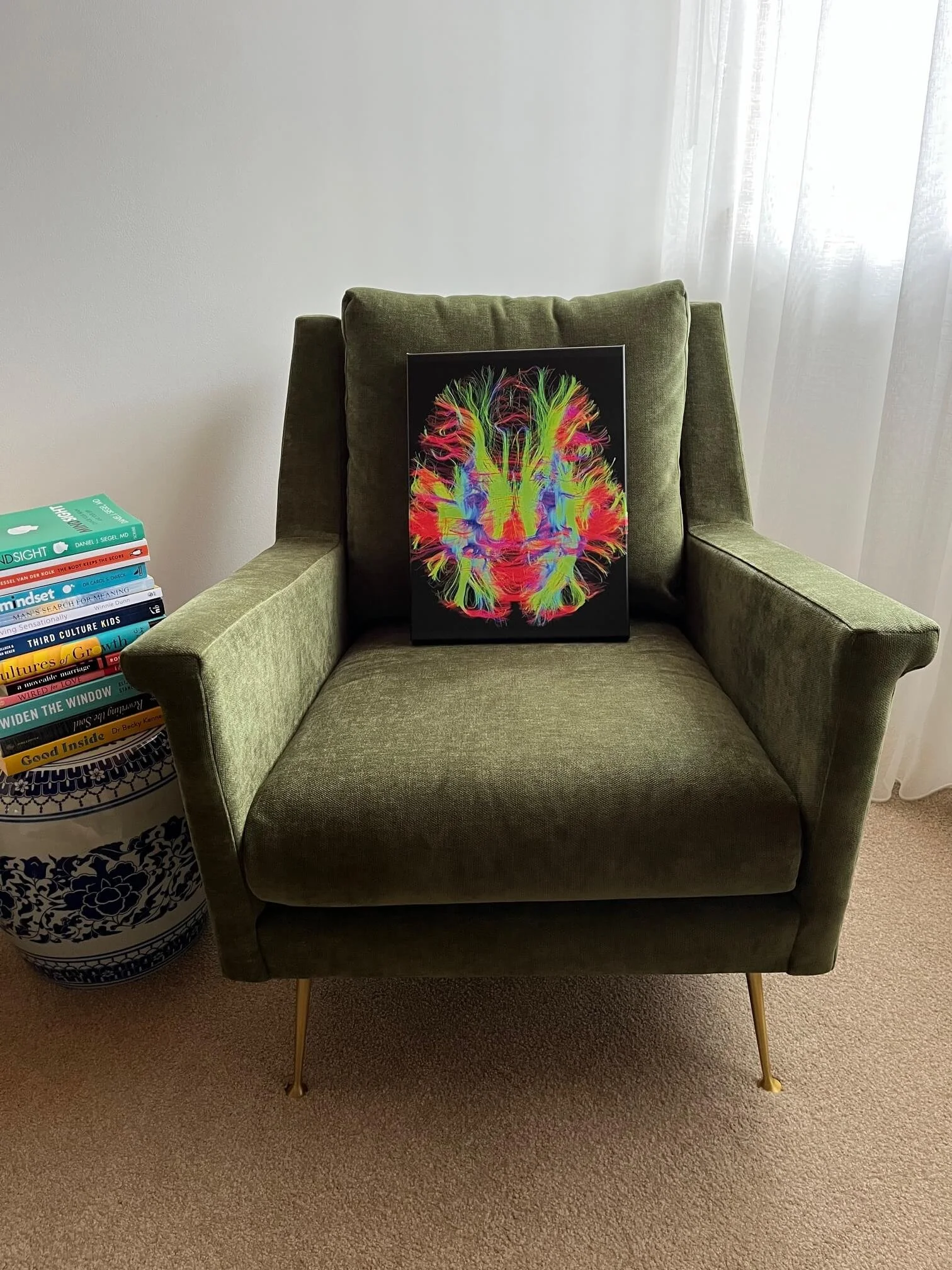
Picture your brain forming new connections as you meet the challenge and learn.
Keep going.
– Carol Dweck
Common Ground Services